Why Do You Keep
Waking Up Congested?
Blocked nose, stuffy sinuses, or sneezing the moment you wake up. This pattern usually points to something in your bedroom air, not a cold. Here's how to find out what it actually is.
Start Free Assessment (8 Minutes)Does This Sound Like Your Mornings?
- You wake up with a blocked or stuffy nose more mornings than not
- Sneezing or congestion tends to show up in the first few minutes of being awake
- You've noticed your nose clearing up once you're out of the bedroom for a while
- It feels worse in certain seasons, or worse during humid weather
- You've used nasal sprays or antihistamines but nothing really solves it
- No one has been able to tell you exactly why it keeps happening
😷 "Breathing or allergy symptoms (asthma, congestion, sneezing, coughing)"
The assessment will focus on the allergen, moisture, and ventilation patterns that can cause morning congestion.
What's Usually Behind Morning Congestion
Most people assume it's seasonal allergies or a cold. Often it's something in the bedroom itself.
Your bedroom is a closed environment where you spend 7-9 hours a night. Certain conditions in that space create the exact pattern you're describing.
🐛 Dust Mite Allergens in Bedding
Dust mites live in mattresses, pillows, and bedding. They produce allergens that accumulate overnight and trigger congestion and sneezing, hitting hardest in the morning after hours of exposure.
💧 Bedroom Humidity Levels
Humidity above 50% feeds dust mite and mold growth. Humidity below 35% dries out nasal passages and makes them more reactive. Either extreme causes morning symptoms. Bedroom humidity often runs very different from the rest of your home.
🍄 Mold or Moisture in Hidden Spots
Window frames, walls near exterior, bathroom walls adjacent to bedrooms. Mold releases spores into bedroom air at night. You won't always see it or smell it, but nasal passages react to it consistently.
🌬️ Poor Bedroom Ventilation
A closed bedroom with poor air exchange concentrates whatever allergens and irritants are present. Stale, recirculated air worsens nasal irritation overnight without any single dramatic cause.
The tricky part: These four causes can overlap or combine. That's why antihistamines only partially help. They treat the reaction but don't remove the source. The assessment figures out which of these are active in your bedroom.
Three Quick Checks Right Now
Before you even start the assessment, these observations take less than 5 minutes.
Check #1: Leave, Then Re-Enter Your Bedroom
Go somewhere else for 5 minutes, then walk back in and breathe in through your nose immediately. Does the air feel stuffy, dusty, or different from the rest of your home? Your nose adapts to smells when you're in a room continuously. Leaving and returning lets you detect what's actually there. A noticeable difference in air quality is a strong indicator.
Check #2: Look at Your Mattress and Pillows Right Now
What to check: How old is your mattress? Your pillows? Do you have allergen-barrier covers on either one? If your mattress is 5 or more years old, your pillows are 2 or more years old, and there are no allergen covers in place, dust mites may be a factor worth looking at.
Why it matters: Dust mites colonize mattresses within months of use. By year two, a pillow without a barrier cover can contain millions of mites and their waste particles. Every hour you sleep, you're breathing air just above that surface.
Strong indicator if: Your bedding is several years old, pillows haven't been washed in over 6 months, or you've never used allergen-proof covers. The assessment factors in your specific bedding situation and tells you what to address first.
Check #3: Look at Windows and Wall Corners
Check the window frames, sills, and wall corners in your bedroom, especially on exterior walls or walls that share a bathroom. Any discoloration, dark spots, or residue you usually ignore? Mold growth in bedrooms is often small, in corners or on window seals, and dismissed as dirt. Even minor mold in a closed sleeping space affects air quality all night.
If symptoms are severe or include difficulty breathing, chest tightness, or don't improve outside the home: These could indicate a medical issue unrelated to air quality. See a doctor before using environmental assessments as a first step.
What the Assessment Investigates
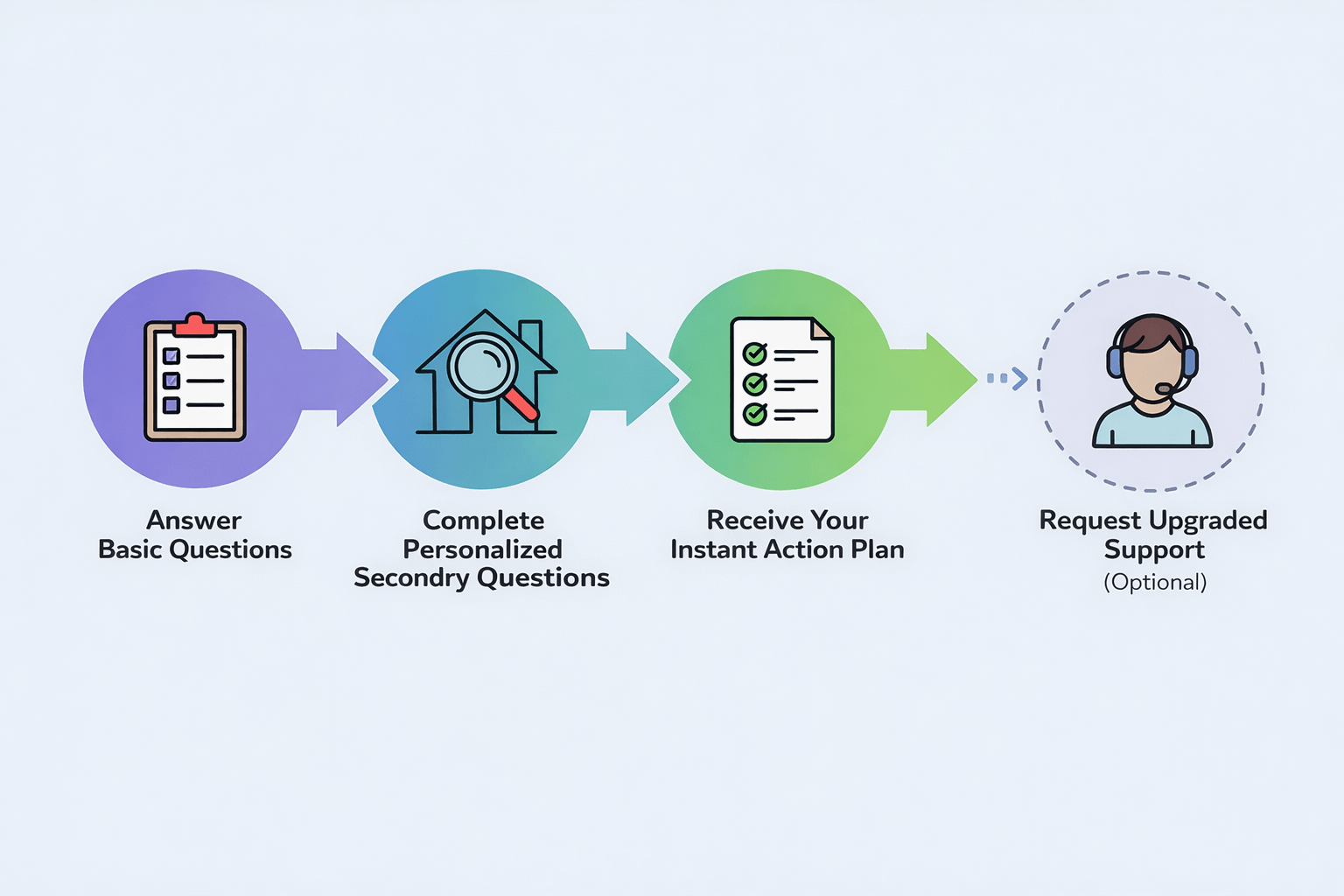
The assessment works through your symptom pattern, home details, bedroom environment, moisture indicators, and recent changes. Results are organized and ready immediately when you finish.
You'll get specific direction on what to check, what to change, and whether your situation warrants a professional. No generic advice about air purifiers before you've identified what's actually causing the problem.
understanding of their air
complete
Select "Breathing or allergy symptoms" when you begin
What You Get From the Assessment
🆓 No-Cost Changes to Try First
Many morning congestion patterns are significantly reduced by changes that cost nothing: adjusting bedroom ventilation, washing bedding differently, changing how you manage humidity. The assessment identifies which of these are relevant to your situation before recommending products.
🛒 Targeted Product Guidance If Needed
If your situation points to something specific (dust mite allergens, humidity imbalance, poor filtration) you'll get guidance on what actually addresses that cause. Not a generic "buy an air purifier" recommendation, but targeted suggestions based on what the assessment found.
👷 When to Call a Professional
If patterns suggest mold, moisture intrusion, or HVAC issues that need hands-on inspection, the assessment tells you that clearly so you're not guessing about whether you need a professional and what kind.
Optional upgrade: After your free assessment, a U.S.-based analyst can review your specific situation, interpret findings, and answer follow-up questions. Under $150 for personalized review. Start free. Upgrade only if you need it.
Why EezyAir
Investigation Before Solutions
We identify what's actually causing your symptoms before recommending anything. That's a different approach from hardware companies and most inspection services.
No One Enters Your Home
You conduct the walk-through yourself. The assessment guides you through what to look for and how to interpret what you find.
No Equipment to Buy First
Most people don't need a $300 air monitor before they understand the problem. Observation and symptom patterns give you most of the picture, for free.
Find Out What's Behind Your Morning Congestion
8 minutes. Instant results. Free to start.
Begin Free AssessmentSelect "Breathing or allergy symptoms" to get started · No credit card required