
Why Is Your Apartment
So Dusty and Stuffy?
Surfaces covered in dust two days after cleaning. A musty smell you can't locate. Air that feels heavy and stale no matter what you try. These patterns aren't just "apartment living" — they have specific causes, and most are fixable once you find them.
Start Free Assessment (8 Minutes)Does This Sound Like Your Apartment?
- Dust comes back within a day or two of cleaning — faster than it should
- There's a musty or stale smell you notice when you walk in, especially after being away
- Windows fog up with condensation, or moisture collects on sills and frames
- The bathroom mirror stays foggy for a long time after a shower
- You feel stuffy or have congestion that's worse at home than anywhere else
- You've tried an air purifier or dehumidifier and it helped some, but not enough
😷 "Breathing or allergy symptoms (asthma, congestion, sneezing, coughing)"
The assessment will focus on the dust accumulation, humidity, ventilation, and moisture patterns most common in apartments.
Why Apartments Get Dusty and Stuffy Faster
It's not that you're a bad cleaner. Apartments have structural characteristics that accelerate dust and moisture buildup.
Understanding which of these apply to your unit is the step most people skip before buying a purifier or dehumidifier that only partially helps.
🌀 Shared or Undersized Ventilation
Many apartment buildings use shared HVAC systems or building ventilation that was designed to minimum code, not for air quality. Dust from hallways, neighboring units, and shared ducts circulates continuously into your space.
🚿 Bathroom Exhaust That Doesn't Actually Work
This is more common than people realize. Many apartment bathroom fans move barely any air — they make noise but spread shower moisture through the unit rather than removing it. That moisture feeds mold and raises overall humidity.
🪟 Air Leaks Around Old Windows and Doors
Older apartment buildings have gaps around window frames and exterior door seals that pull in outdoor dust, pollen, and humid air. You clean the apartment but new particles keep arriving through the same gaps.
💧 Moisture With Nowhere to Go
Cooking, showering, plants, and even breathing add moisture to apartment air. Without adequate ventilation to remove it, humidity stays high. High humidity causes dust particles to clump and drop faster, and creates conditions for mold in closets and on exterior walls.
The renter's dilemma: Some of these causes are yours to fix. Others are the building's problem and require landlord action. The assessment separates what you control from what needs to be documented and reported, so you're not spending money on solutions for problems that aren't yours to solve.
Three Quick Checks Right Now
These take under 10 minutes and give the assessment more useful data to work from.
Check #1: Test Your Bathroom Exhaust Fan
Tear off a single sheet of toilet paper or tissue. Turn on your bathroom exhaust fan and hold the tissue near the vent cover. Does it get firmly sucked against the vent and stay there, or does it barely flutter? A fan that doesn't pull the tissue firmly isn't removing shower moisture from the air — it's just making noise. This single issue is responsible for more apartment humidity and musty smell problems than almost anything else. Note the result before you start the assessment.
Check #2: Check Window Frames and Exterior Wall Corners
Look for: Condensation on glass or sills in the morning, any dark discoloration around window frames, and check where walls meet the ceiling in exterior-facing rooms. Any spots that look darker than the surrounding surface, feel slightly damp, or have a faint musty smell in their vicinity are worth noting. Even small mold growth in corners of a bedroom or living room affects air quality throughout the space, especially in a smaller apartment where air circulates through every room.
Also check under sinks: Open the cabinet below kitchen and bathroom sinks and smell inside. Damp or musty odor under a sink often means a slow drip or moisture accumulation that's been there long enough to become a mold source.
Check #3: Walk In From Outside and Breathe
Leave the apartment for at least 30 minutes and then walk back in through the front door. Breathe in through your nose right away. Does the air smell different from outside? Dusty, stale, or musty in a way you don't notice when you've been home for hours? Your nose adapts to smells you're continuously exposed to. The re-entry test cuts through that adaptation and lets you detect what's actually there. A noticeable difference is a clear sign of inadequate fresh air exchange — one of the most fixable apartment air quality problems.
If you find visible mold larger than a few square inches, see active water coming in, or smell sewer gas: These are building maintenance issues. Photograph everything with timestamps and report to your landlord in writing before doing anything else. Don't attempt to clean large mold areas yourself.
What the Assessment Investigates
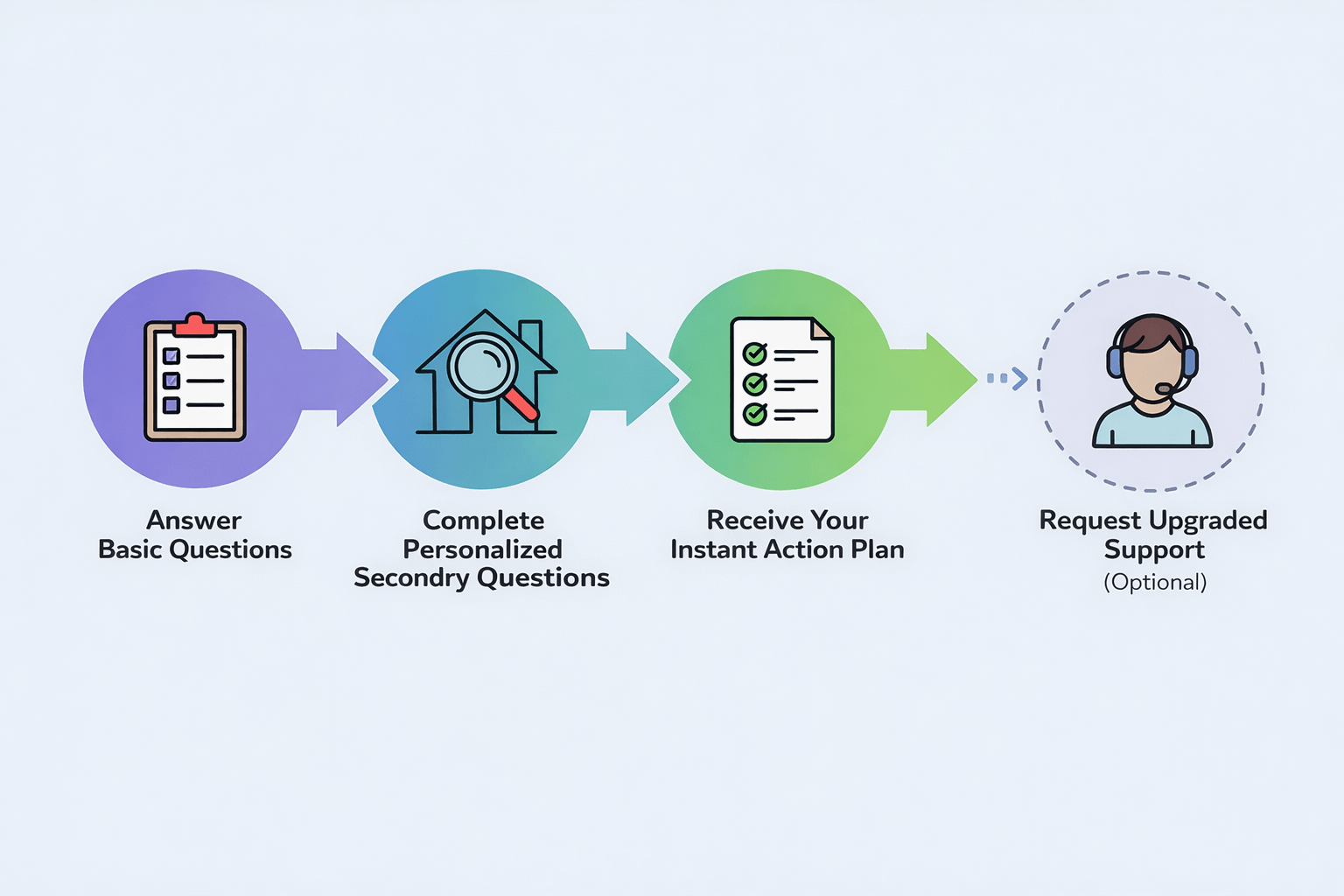
The assessment works through your symptom and observation patterns, the building's age and type, ventilation performance, moisture sources, humidity patterns, and what you've already tried. Results are organized when you finish.
You'll get direction on what to fix yourself, what products (if any) actually address your specific causes, and what to document and report to your landlord. Not generic apartment advice, but a prioritized roadmap based on your specific answers.
understanding of their air
complete
Select "Breathing or allergy symptoms" when you begin
What You Get From the Assessment
🆓 No-Cost Changes to Try First
A lot of apartment dust and moisture problems improve significantly with free changes: running the exhaust fan longer after showers, adjusting how you ventilate while cooking, changing filter replacement timing on in-unit AC units, or sealing gaps around windows with weatherstripping. The assessment tells you which of these apply before pointing you toward any product.
🛒 Targeted Product Guidance If Needed
If your patterns point to a specific gap — high humidity with no adequate exhaust, filtration that can't keep up with dust infiltration, or bedroom moisture accumulation — you'll get guidance on what type of solution addresses it. A dehumidifier sized for your space when humidity is the confirmed issue. A HEPA filter upgrade when infiltration is the problem. Not a generic recommendation before the cause is established.
👷 What to Report to Your Landlord
If the assessment points to broken ventilation, moisture intrusion through the building envelope, or HVAC maintenance problems, you'll know exactly what to document and request in writing. This matters for renters — landlords are responsible for habitability, and knowing how to frame a maintenance request appropriately makes a difference in getting it addressed.
Optional upgrade: After your free assessment, a U.S.-based analyst can review your specific situation, look at photos of problem areas, and answer follow-up questions. Under $150. Start free. Upgrade only if you need it.
Why EezyAir
Renter-Specific Investigation
We separate what you can fix from what's the building's problem. Spending money on a dehumidifier when the real issue is a broken exhaust fan is exactly what the assessment helps you avoid.
No One Enters Your Apartment
You do the walk-through yourself using the assessment's guidance. No scheduling, no strangers, no pressure to buy an inspection package.
Investigation Before Solutions
EezyAir sells information, not hardware. The goal is identifying which specific causes are active in your apartment before recommending anything you need to buy.
Find Out Why Your Apartment Is Dusty and Stuffy
8 minutes. Instant results. Free to start.
Begin Free AssessmentSelect "Breathing or allergy symptoms" to get started · No credit card required