
Why Do You Wake Up With a
Headache or Feel Groggy?
Eight hours of sleep and you still wake up with a dull headache, stuffy nose, or that heavy fog that takes an hour to clear. If it improves once you're up and moving around, the problem may not be your sleep — it may be the air in your bedroom.
Start Free Assessment (8 Minutes)Does This Sound Like Your Mornings?
- You wake up with a headache that fades within an hour or two of getting up
- Morning congestion or a stuffy nose that clears once you're out of the bedroom
- You feel groggy or foggy even after a full night's sleep
- The bedroom feels noticeably heavier or stuffier than other rooms in the house
- Symptoms are worse in winter when windows stay closed for weeks at a time
- You sleep fine at other places — hotels, family's house — and feel better in the morning
😴 "Fatigue, headaches, trouble concentrating"
The assessment will focus on ventilation patterns, CO2 accumulation, humidity, and the other bedroom factors most commonly linked to morning symptoms.
What Happens to Bedroom Air While You Sleep
This isn't about sleep quality. It's about what builds up in a closed room over 8 hours.
When you breathe in a closed bedroom overnight, you exhale CO2 continuously. In a well-ventilated room, fresh air replaces it. In a bedroom with poor air exchange, CO2 accumulates — and it's not the only thing that does.
😮 CO2 Buildup From Breathing
Normal outdoor air sits around 400 to 450 ppm CO2. A closed bedroom with one or two people sleeping can reach 1,500 to 2,500 ppm by morning. At those levels, grogginess, headaches, and reduced focus are well-documented effects — distinct from how you feel after bad sleep.
💧 Moisture From Breathing
You exhale moisture all night. Without air circulation, humidity builds up in the bedroom — especially in the mattress and bedding. High overnight humidity accelerates dust mite populations and can enable mold growth in corners and on walls before you'd ever notice it visually.
🛏️ Off-Gassing From Mattress and Furniture
Mattresses, pillows, and furniture continue releasing VOCs (volatile organic compounds) over time, particularly in newer pieces. In a closed, unventilated bedroom these don't dissipate. You breathe concentrated off-gassing for 8 hours rather than the trace amounts in a ventilated space.
🌬️ Dead Air and Settled Allergens
Without air movement, dust and allergens that would otherwise stay suspended settle into bedding and surfaces. Dust mites thrive specifically in the warm, humid, undisturbed microenvironment a poorly ventilated bedroom creates. Morning congestion is often this, not outdoor allergies.
The pattern that points to the bedroom: Symptoms that are worse in the morning than at any other point in the day, that improve within an hour or two of leaving the room, and that are worse in winter when windows stay closed — these reliably point to the bedroom environment rather than sleep quality or daytime exposures.
Three Quick Checks Right Now
None of these require equipment. They take about 10 minutes total and give the assessment much better data to work from.
Check #1: The Re-Entry Test
Sleep tonight with the bedroom door closed as you normally would. Tomorrow morning, get up and leave the bedroom for at least 5 to 10 minutes. Then walk back in and take a deliberate breath through your nose right as you enter. Does the air feel noticeably heavier, staler, or harder to breathe than the hallway? Your nose adapts to the air you've been breathing all night — leaving and returning cuts through that adaptation and lets you detect what's actually accumulated.
If there's a clear difference, that's a ventilation problem. Note how long it takes for the room to feel normal once the door is open. If it takes more than 20 to 30 minutes, air exchange is poor.
Check #2: Count Your Air Exchange Points
Walk around your bedroom right now and count every place where air can move in or out: the gap at the bottom of the door, HVAC vents (and whether they're actually delivering air — hold your hand near them), and windows. Note whether windows have any draft even when closed.
Then check the HVAC vent specifically: Hold a tissue near the vent when the system is running. Does it move noticeably? Many bedrooms — especially those added during renovations, at the end of duct runs, or in older homes — receive almost no conditioned air. The system runs throughout the house but your bedroom is effectively a dead zone.
A bedroom with a sealed door, no active HVAC flow, and closed windows has essentially zero fresh air exchange overnight.
Check #3: Compare to Another Room
Walk from your bedroom to your living room or kitchen right now and notice the air. Does one feel noticeably different from the other — heavier, more still, or stuffier? A significant difference between rooms suggests the bedroom has worse ventilation, not just that the whole house has air quality issues.
Also check whether your symptoms on mornings after you fall asleep on the couch or in a different room are any different from mornings in your bedroom. If you feel better those mornings, the bedroom environment is almost certainly a contributing factor.
Important distinction — CO2 vs. carbon monoxide: This page addresses CO2 (carbon dioxide), which builds up from breathing and causes grogginess. Carbon monoxide (CO) is a separate, dangerous combustion gas. If you have gas appliances, a garage under or adjacent to the bedroom, or if your CO detector has ever alarmed, that is a different and more urgent situation. Ensure working CO detectors are in place before anything else.
Why "Just Open a Window" Often Doesn't Fully Fix It
Ventilation is usually part of the answer. It's rarely all of it.
If the bedroom's only problem is CO2 buildup from inadequate air exchange, cracking a window or door overnight makes a noticeable difference within a few nights. But most people who investigate this discover other factors are involved.
Dust mites that have built up in a poorly ventilated mattress and bedding don't disappear when ventilation improves — they need to be physically addressed. Mold that's developed on a wall corner from months of elevated overnight humidity doesn't go away once you start airing the room out. VOCs from furniture that have been building up in a closed room will take time to dissipate even with adequate ventilation.
Opening windows also isn't always the right call. If you live within a few blocks of a major road, outdoor air quality during certain times of day can be meaningfully worse than indoor. If outdoor humidity is high, bringing that air in makes dust mite and mold conditions worse, not better. The assessment works through your specific home location and building characteristics before recommending whether outdoor air is a net benefit for your bedroom.
This is why people try a fan, notice some improvement, but still wake up feeling off some mornings. The ventilation piece helped. Something else is still contributing. The assessment identifies what that is before pointing toward solutions.
What the Assessment Investigates
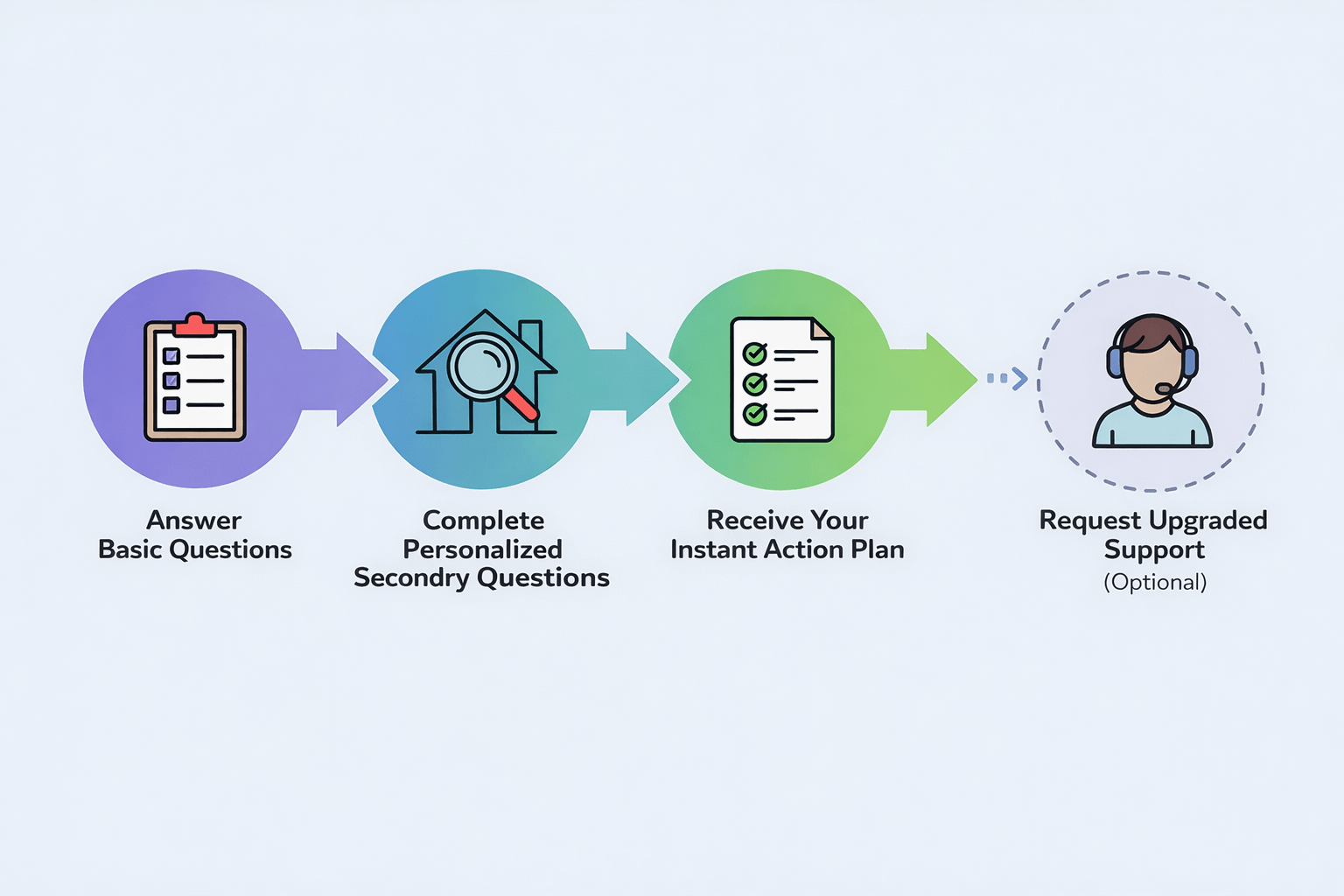
The assessment maps your morning symptom patterns, bedroom layout and ventilation characteristics, humidity indicators, mattress and bedding age, heating and cooling setup, and whether outdoor air quality makes ventilation a viable fix in your location.
Results are organized when you finish: what to change at no cost, what products (if any) address your specific situation, and when a professional evaluation makes sense.
understanding of their air
complete
Select "Fatigue, headaches, trouble concentrating" when you begin
What You Get From the Assessment
🆓 No-Cost Changes to Try First
Ventilation adjustments, door and window strategies, humidity management, and bedroom circulation improvements that cost nothing. Many morning symptom patterns improve substantially from behavioral changes alone — the assessment identifies which ones apply to your specific bedroom before suggesting anything else.
🛒 Targeted Guidance If Products Are Needed
If patterns point to dust mite accumulation, a specific humidity issue, or indoor allergens that ventilation alone won't address, you'll get guidance on what type of product helps and why — not a generic "buy an air purifier" before the underlying cause is understood.
👷 When to Bring In a Professional
If the assessment points to an HVAC balancing issue, mold that needs professional remediation, or gas appliance concerns, you'll know what type of contractor to contact and what to tell them based on your specific findings.
Optional upgrade: After your free assessment, a U.S.-based analyst can review your specific situation, look at photos of your bedroom or HVAC setup, and answer follow-up questions. Under $150. Start free. Upgrade only if you need it.
Why EezyAir
Bedroom-Specific Investigation
Morning symptoms have a distinct set of causes tied to what accumulates in a closed room overnight. We investigate that environment specifically, not just general home air quality.
No One Enters Your Home
You do the checks yourself. No scheduling, no technicians, no pressure. The assessment guides you on what to observe so you build an accurate picture on your own timeline.
Investigation Before Solutions
EezyAir sells information, not hardware. The goal is identifying which specific causes are present in your bedroom before recommending anything you'd need to buy or change.
Find Out Why You're Waking Up Feeling Off
8 minutes. Instant results. Free to start.
Begin Free AssessmentSelect "Fatigue, headaches, trouble concentrating" to get started · No credit card required