
More Tired at Home
Than You Think You Should Be?
Fatigue, headaches, and brain fog that seem worse at home and better when you're out can have an air quality explanation. Find out what's worth investigating before buying anything or calling anyone.
Start Free Assessment (8 Minutes)If multiple people in your home feel the same way, or symptoms are sudden and severe: Headache, fatigue, and confusion affecting everyone in the home (especially when waking up) can indicate carbon monoxide. Evacuate immediately and call 911. CO is odorless and can become life-threatening quickly. This assessment is for investigating persistent, pattern-based symptoms with a possible home connection, not acute emergencies.
Does This Describe What You're Experiencing?
- You feel more drained at home than when you're out, even on days you've slept enough
- You seem to feel better after spending time away from the house
- Headaches, brain fog, or difficulty concentrating that come and go without an obvious explanation
- Symptoms seem worse in winter when the house is closed up, or when the heat or AC runs
- You wake up feeling less rested than you'd expect after a reasonable night's sleep
- Others in your home mention feeling sluggish or off too
- Doctors haven't found a clear explanation, or you haven't pursued it because it feels too vague to describe
- It started or got noticeably worse after moving in, a renovation, or new furniture
😴 "Fatigue, headaches, or trouble concentrating"
The assessment will investigate the timing patterns, combustion sources, ventilation factors, and recent home changes most relevant to your situation.
Why Feeling Better Away From Home Is Worth Paying Attention To
General fatigue has a long list of causes. When it seems to ease up after time away from home, that's a useful pattern. It suggests the source may be in your environment rather than something systemic, which changes what's worth investigating first.
The home connection: Most people spend 60 to 90% of their time indoors, and the majority of that is at home. If something in the air is affecting how you feel, you're being exposed to it for hours every day. Effects at low concentrations can add up over that kind of sustained exposure, which is part of why symptoms can feel vague and hard to pin down even when there's a real cause.
The problem with treating this without investigating first is that fatigue has several distinct air quality causes that need different responses. Treating the wrong one doesn't help, and can create the false impression that air quality isn't a factor when it actually might be.
What Air Quality Factors Actually Cause Fatigue and Brain Fog
These are the four causes the assessment investigates most closely for this symptom pattern. They're distinct problems with distinct sources, and they require different responses.
🔴 Low-Level Carbon Monoxide (CO)
The most serious and most commonly missed cause. CO at low concentrations doesn't set off detectors but can cause persistent fatigue, morning headaches, and brain fog. Sources include gas furnaces, water heaters, stoves, attached garages, and wood-burning fireplaces, particularly when venting is compromised or appliances are aging. Symptoms that ease after leaving home and seem worse when combustion appliances run are worth investigating for CO.
🏠 Poor Ventilation and CO2 Buildup
In tightly sealed or poorly ventilated homes, CO2 from normal breathing builds up faster than it clears. Elevated indoor CO2 (carbon dioxide, not monoxide) causes drowsiness, reduced concentration, and a stuffy sensation. Most noticeable in winter when homes are closed up. Symptoms that seem worse in closed conditions and ease when windows are open point toward ventilation as a factor.
🧪 VOCs from Furniture, Flooring, and Materials
New furniture, flooring, mattresses, cabinets, and paint all off-gas volatile organic compounds for months after installation. At sustained indoor concentrations, VOC exposure causes headaches, fatigue, and difficulty concentrating. A symptom pattern that started after a move, renovation, or new purchase and has gradually improved over months is characteristic of this cause.
🌿 Allergens Disrupting Sleep Quality
Dust mites, mold spores, and pet dander don't cause acute fatigue the way CO does, but they disrupt sleep quality and trigger inflammatory responses that make you feel less rested even after adequate hours. Morning symptoms that improve later in the day, carpet in the bedroom, or a mattress and pillows over several years old are typical patterns for this cause.
On CO specifically: Standard CO detectors are designed to alarm at concentrations that are immediately dangerous, typically 70 ppm sustained. Chronic low-level exposure in the 10 to 35 ppm range can cause real symptoms but may never trigger an alarm. A working CO detector that hasn't gone off does not rule out low-level CO as a contributing factor.
Two Questions That Help Narrow the Source
You don't need answers before starting. But if you've noticed either of these, they're worth noting in the assessment.
Does It Get Worse When Heat or AC Runs?
If symptoms seem to increase when the furnace or heating system comes on, that's a combustion or duct system indicator worth following up on. A furnace with a cracked heat exchanger can introduce combustion gases into the air supply. HVAC ducts that pass through garages or crawl spaces can pull contaminated air into living areas. That specific timing, worse when the system runs, is one of the more useful CO investigation patterns.
When Did It Start?
A pattern that began within weeks of moving into a home points toward something already present, like mold, previous water damage, or an existing combustion issue. One that started after a renovation, new flooring, or a new furniture purchase points toward VOC off-gassing. One that's been gradual and gets worse in winter points toward ventilation. One that affects multiple people and seems to ease when people spend time away points toward a combustion source worth testing for CO.
What the Assessment Investigates
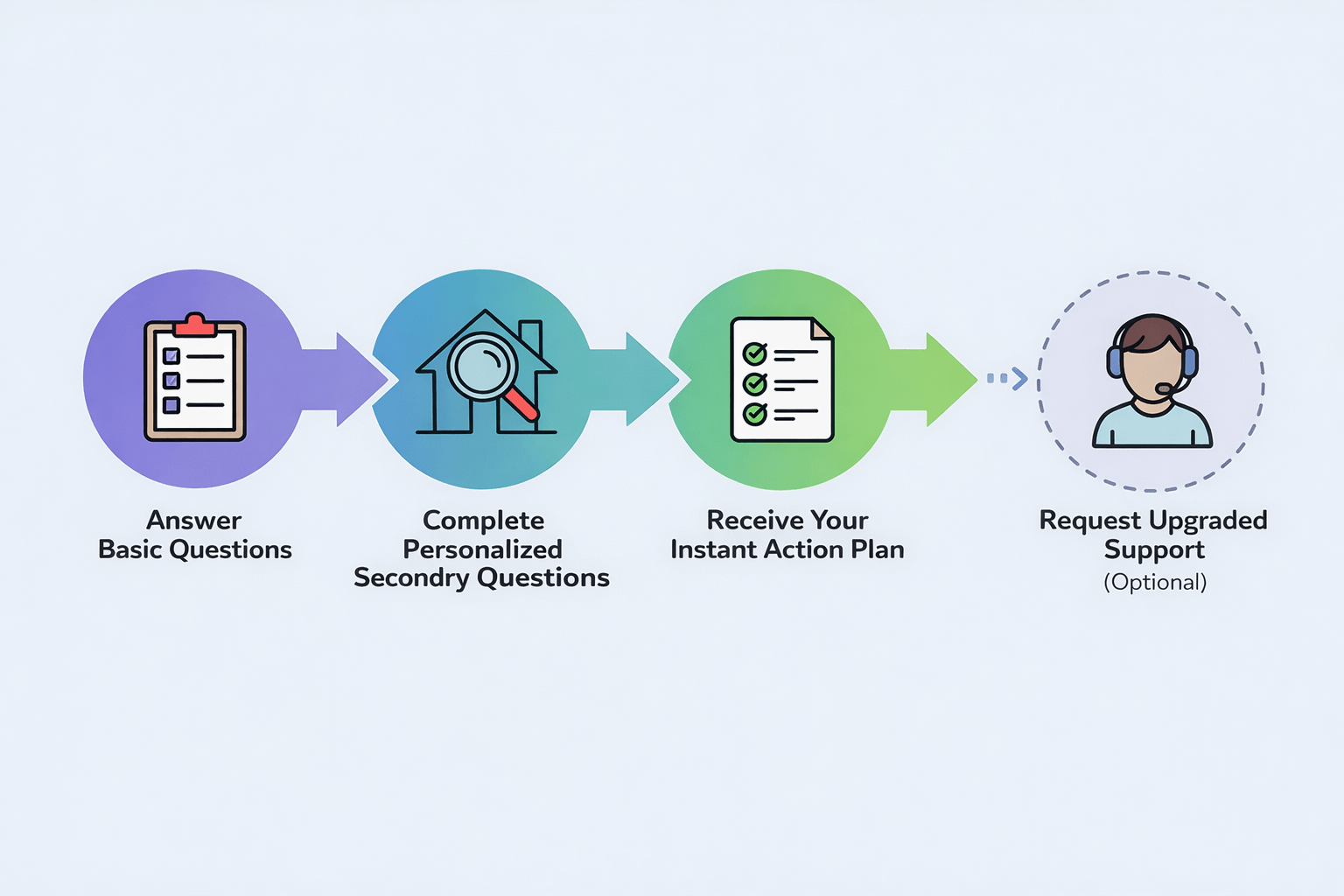
The assessment works through symptom timing and patterns, combustion sources in your home, ventilation factors, recent changes, and your home's specific characteristics. It's built to separate the CO, VOC, ventilation, and allergen patterns from each other, because they look similar on the surface but need different responses.
Results come in three categories: no-cost investigation steps, product guidance only when your pattern warrants it, and which professional to contact if your situation calls for one.
completed
of their air
complete
Select "Fatigue, headaches, or trouble concentrating" to begin
Why EezyAir
Four Causes, One Assessment
CO, VOCs, ventilation, and allergens all produce similar-feeling fatigue. The assessment separates these patterns from each other so you investigate the right cause instead of guessing across all of them.
Nothing to Sell You
HVAC companies find HVAC problems. Air purifier companies find particulate problems. We have no service to upsell. The assessment points toward what your pattern actually suggests, including when professional testing is warranted.
Safety Situations Get Flagged
CO at any level is worth taking seriously. If your pattern is consistent with low-level CO exposure, the assessment will identify that and tell you what to do next rather than just pointing toward general air quality improvements.
Optional upgrade: After your free assessment, you can have a U.S.-based analyst review your specific home details, answer questions about your symptom pattern, and confirm next steps. Under $150. Start free. Upgrade only if you want it.
Find Out What's Actually Causing It
8 minutes. Instant results. Free to start.
Begin Free AssessmentSelect "Fatigue, headaches, or trouble concentrating" · No credit card · 2,214 completed