Why Is Your Child's Asthma
Worse at Home?
If your child coughs more at night, needs their inhaler more at home than at school, or wakes up wheezing, something in your home is likely triggering it. The inhaler treats the symptoms. This assessment investigates the cause.
Start Free Assessment (8 Minutes)Does This Sound Like Your Child?
- Symptoms are noticeably worse at home than at school or a friend's house
- Nighttime coughing or wheezing that disrupts sleep — yours and theirs
- You've done all the "asthma-proof the bedroom" things and symptoms persist
- The rescue inhaler gets used more than it should
- Symptoms flare up in specific rooms or at certain times of year
- The pediatrician mentioned environmental triggers but didn't say how to find them
- You've bought an air purifier and aren't sure if it's actually helping
😷 "Breathing or allergy symptoms (asthma, congestion, sneezing, coughing)"
Answer on behalf of your child. The assessment will focus on the trigger patterns, room-specific factors, and home environment characteristics most associated with childhood asthma flare-ups.
The Inhaler Treats Symptoms. It Doesn't Remove Triggers.
Asthma medication is essential. But if triggers in your home are causing flare-ups, medication manages the result of something still happening — it doesn't stop it from happening.
The most common reason children need their rescue inhaler more than expected at home is that one or more environmental triggers are present and haven't been identified. Each trigger type requires a different response, which is why generic advice ("get an air purifier," "remove carpets") often helps partially at best.
🛏️ Dust Mites in Bedding and Carpet
Dust mites thrive in mattresses, pillows, and carpet fibers — especially in bedrooms. They're the most common indoor asthma trigger in children. Nighttime and early-morning coughing is a characteristic pattern. Allergy-proof covers help, but only if dust mites are confirmed as the primary trigger.
💧 Mold From Hidden Moisture
Mold doesn't have to be visible to trigger asthma. Slow moisture accumulation in walls, under flooring, or inside HVAC systems creates airborne spores that are potent triggers for some children. Symptoms that are worse in certain rooms or correlate with humid weather often point here.
🐾 Pet Dander Distribution
Pet dander is sticky and distributes throughout the home via air currents and HVAC systems. Children can react to dander in rooms where pets never go. This is why removing pets from a child's bedroom sometimes doesn't resolve bedroom symptoms.
🔥 Combustion and Chemical Irritants
Gas stoves, gas water heaters, poorly vented fireplaces, cleaning products, air fresheners, and off-gassing from new furniture all release airborne compounds that irritate airways. These are especially relevant in tightly sealed homes with limited fresh air exchange.
Why most parents don't find the trigger on their own: Each trigger type has a different pattern — different timing, different rooms, different seasonal variation. A HEPA filter helps with particles and dander but does nothing for mold spores coming from inside the HVAC. Humidity control helps with dust mites but not with chemical irritants. Without mapping the pattern first, solutions are guesswork.
What Parents Find
My daughter was using her inhaler three times a week. The pediatrician said we needed to address environmental triggers but didn't tell us how. The assessment helped us identify that her symptoms were worst in her bedroom and correlated with when the heat was running. Turns out our HVAC filter was inadequate and we had dust in the ductwork. Within a month of addressing both issues, she only needed her inhaler once or twice a month.
The HVAC connection in Jennifer's case is one of the most common patterns the assessment identifies — and one of the easiest to overlook because no single professional tends to connect a child's asthma symptoms to a dirty duct system.
What the Assessment Investigates
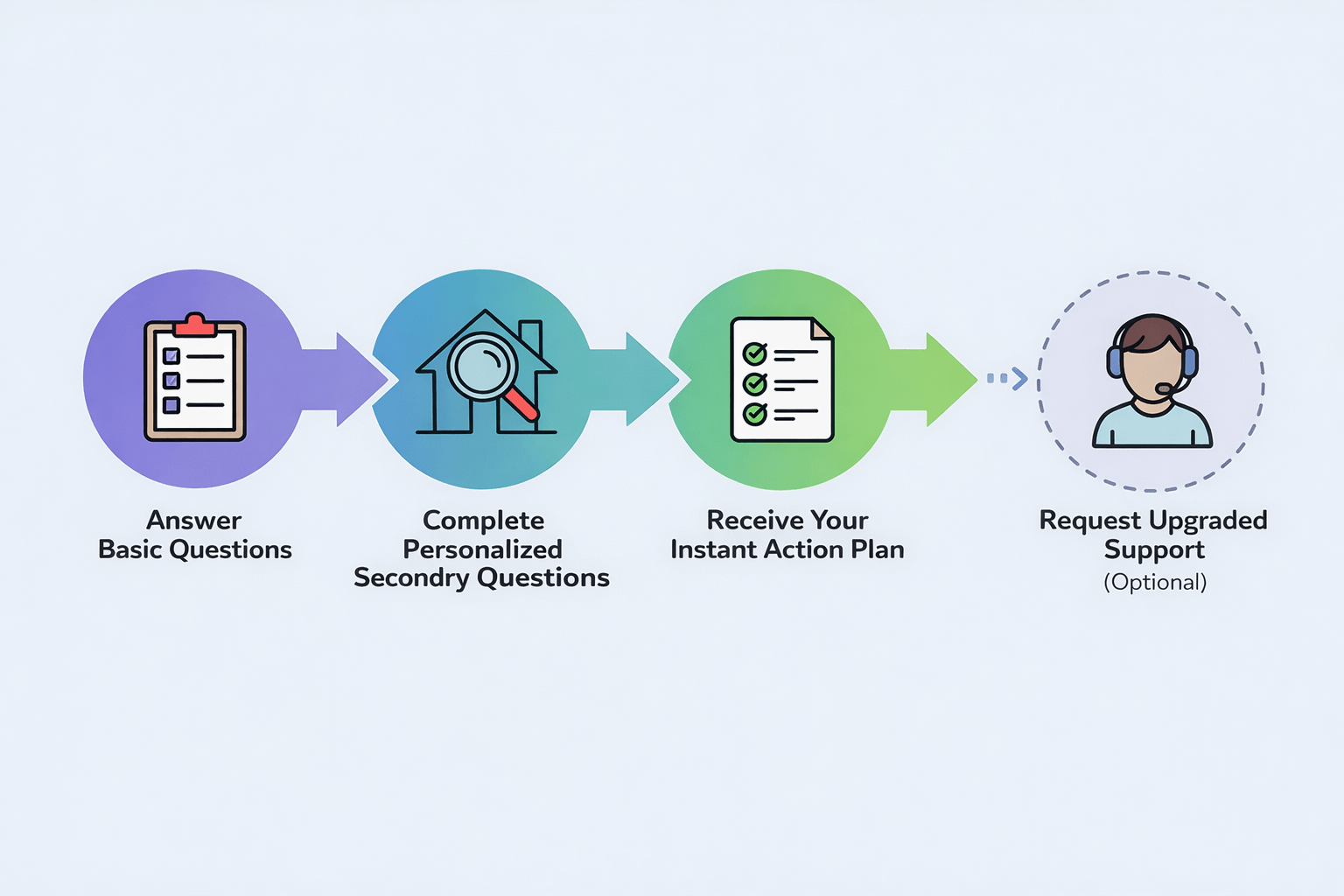
The assessment maps your child's symptom timing, the specific rooms and situations where symptoms are worst, your home's HVAC setup and filtration, humidity patterns, pets, recent changes, and what you've already tried. You answer on your child's behalf.
Results give you a prioritized list of probable environmental triggers specific to your home — not a generic checklist, but a mapped pattern based on your actual answers. You'll know which factors to address first and why.
understanding of their air
complete
Select "Breathing or allergy symptoms" when you begin
What You Get From the Assessment
🆓 No-Cost Changes to Try First
Ventilation timing, cleaning protocol adjustments, HVAC filter changes, and humidity management steps that cost nothing. Many asthma trigger situations improve significantly from free changes once the right trigger category is identified. The assessment tells you which apply before pointing you toward any product.
🛒 Targeted Product Guidance If Needed
If patterns point to a specific gap — airborne particle load, humidity outside the healthy range, pet dander distribution throughout the home — you'll get guidance on what type of product addresses it and why. Not "buy a HEPA filter" before it's established that airborne particles are the relevant issue for your child.
👷 When to Involve a Professional
If the assessment points to potential mold, HVAC contamination, or a level of environmental burden that warrants professional inspection, you'll know what type of specialist to contact and what to tell your pediatrician about environmental factors based on your specific findings. The assessment results give you something concrete to bring to medical appointments.
Optional upgrade: After your free assessment, a U.S.-based analyst can review your specific situation, look at photos of your child's bedroom or HVAC setup, and answer follow-up questions. Under $150. Start free. Upgrade only if you need it.
Why EezyAir
Pattern First, Solutions Second
We map when and where your child's symptoms occur before recommending anything. That pattern is what distinguishes dust mites from mold from dander from combustion — and each requires a different response.
No One Enters Your Home
You do the investigation yourself based on the assessment's guidance. No scheduling, no strangers, no pressure. Results are available immediately when you finish.
Investigation, Not Diagnosis
EezyAir investigates environmental patterns, not medical conditions. We don't diagnose asthma or replace your child's healthcare provider. We give you specific environmental findings to act on and bring to medical appointments.
Find Out What's Triggering Your Child's Asthma at Home
8 minutes. Instant results. Free to start.
Begin Free AssessmentSelect "Breathing or allergy symptoms" to get started · No credit card required