
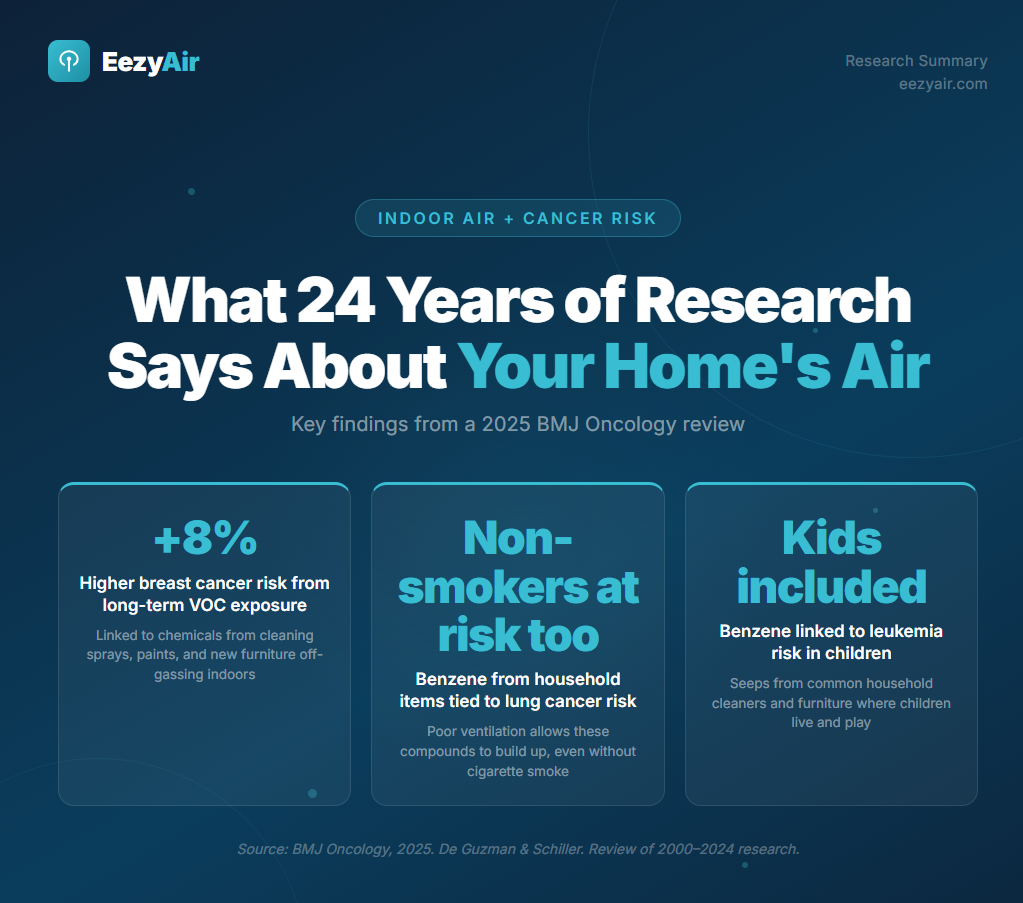
How Indoor Air Pollution in Your Home Raises Cancer Risk: Key Findings from BMJ Oncology 2025
Most people associate cancer risk with smoking or outdoor pollution. A 2025 review in BMJ Oncology adds another location to that list: the inside of your home. The study, which covers 24 years of research, found that benzene and formaldehyde from everyday items like cleaning sprays, paints, and new furniture are linked to lung cancer risk even in non-smokers. Long-term VOC exposure was also associated with an 8% higher breast cancer risk, and benzene from household sources was tied to leukemia risk in children. If you've never thought much about what's in your indoor air, this research makes a case for starting.
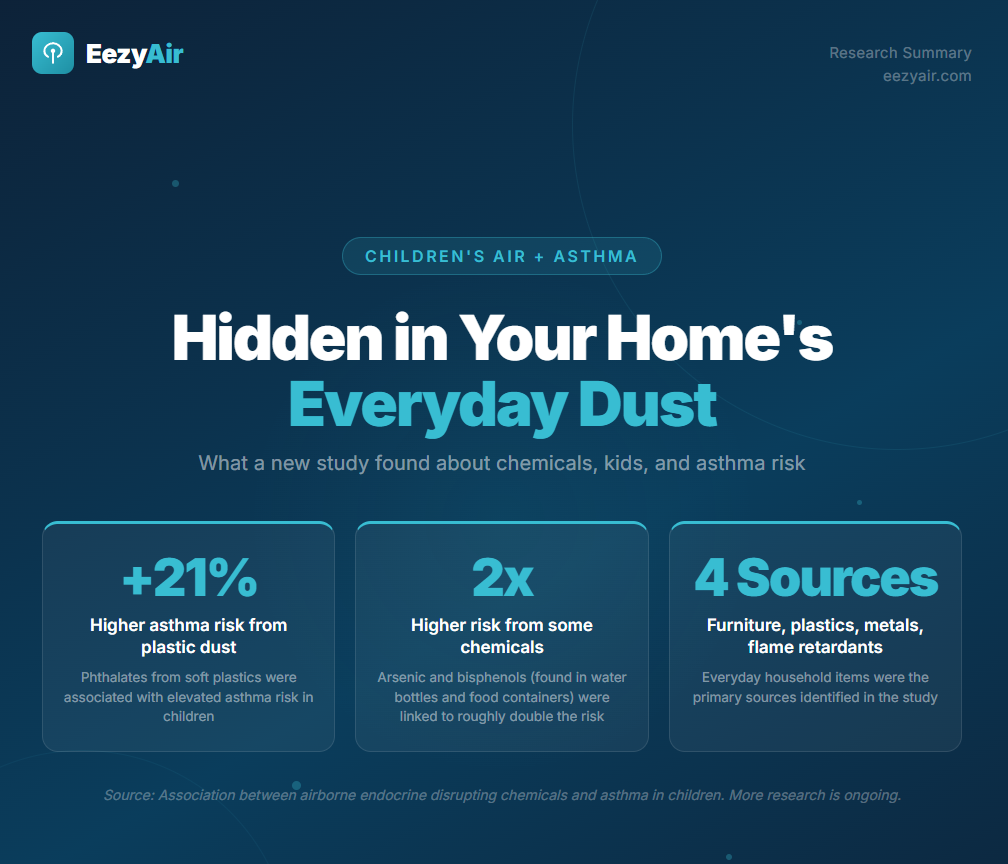
Research Summary: Association between airborne endocrine disrupting chemicals and asthma in children
The dust settling in your home may contain more than you'd expect. A new study examining airborne endocrine disrupting chemicals found associations between common household compounds and asthma risk in children. Phthalates from soft plastics were linked to a 21% higher risk, while bisphenols and arsenic showed associations with roughly double the risk in some cases. Flame retardants, found in furniture and electronics, were also flagged. The researchers note that more studies are needed, but the early picture points to everyday materials as a meaningful piece of the asthma puzzle for kids.