
How Indoor Air Pollution in Your Home Raises Cancer Risk: Key Findings from BMJ Oncology 2025
Most people associate cancer risk with smoking or outdoor pollution. A 2025 review in BMJ Oncology adds another location to that list: the inside of your home. The study, which covers 24 years of research, found that benzene and formaldehyde from everyday items like cleaning sprays, paints, and new furniture are linked to lung cancer risk even in non-smokers. Long-term VOC exposure was also associated with an 8% higher breast cancer risk, and benzene from household sources was tied to leukemia risk in children. If you've never thought much about what's in your indoor air, this research makes a case for starting.

Indoor Allergens and Sleep Health: How Pet Dander, Mold, and Pests Impact Your Rest
If you share your bed with a pet or wake up congested, a 2025 study might explain why. Research published in the Journal of Allergy and Clinical Immunology analyzed bedroom allergen levels from 3,399 U.S. adults and found that nearly 4 in 10 had elevated pet allergens in their sleeping space, with dust mites close behind at 38.5%. Both were associated with sleep disturbances ranging from frequent snoring to sleep disorder diagnoses. The findings suggest your bedroom air is worth a closer look, especially if you've already ruled out the usual suspects.
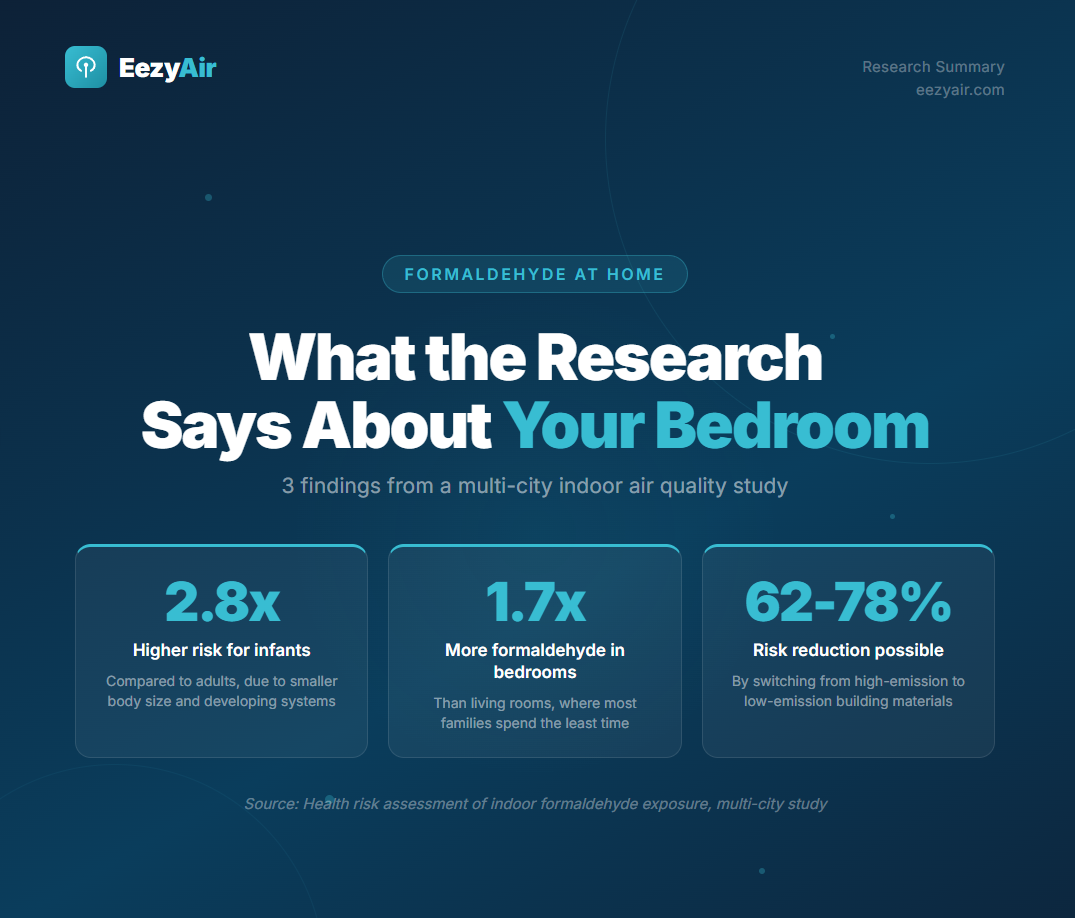
Research Summary: Health risk assessment of indoor formaldehyde exposure
Formaldehyde is one of the most common indoor air chemicals, and most homeowners have no idea it's there. A health risk assessment spanning 11 cities found that bedroom levels can run nearly 1.7 times higher than living rooms, and that infants face roughly 2.8 times the exposure risk of adults due to their body size and developing systems. The good news: material choices during renovation or furnishing can reduce estimated cancer risk by 62-78%. Here's what the research says, and what it means for U.S. homes.

Understanding Indoor Air Quality: Why It Matters for Your Family
If your family is still sneezing after buying an air purifier, you're not alone. Most homeowners try one product at a time and wonder why nothing fully works. The reason: poor indoor air quality is rarely a single problem. Mold, VOCs, humidity imbalances, and poor ventilation often coexist in the same home, and a device built to tackle one won't touch the others. Before spending more on equipment, it's worth understanding what's actually going on. That's where a full indoor air assessment changes the game.