Why Do You Keep Getting
Headaches at Home?
Sinus pressure that builds through the day. Head pain that eases when you leave but comes back when you return. Morning headaches that start before you've done anything. If this is your pattern, something in your home environment is likely involved.
Start Free Assessment (8 Minutes)Does This Sound Like Your Situation?
- You get headaches at home more than anywhere else
- Sinus pressure or facial pain builds through the morning or afternoon
- You feel noticeably better after being outside or away from the house for a while
- The headaches come with congestion, sneezing, or that heavy feeling behind your eyes
- Antihistamines or decongestants help some, but symptoms keep coming back
- You've never been able to pin down exactly what's triggering it
😷 "Breathing or allergy symptoms (asthma, congestion, sneezing, coughing)"
The assessment will focus on the allergen sources, moisture, and ventilation patterns that drive sinus headaches and indoor allergy symptoms.
What's Usually Behind Indoor Allergy Headaches
The headache is almost never the original problem. It's your sinuses responding to sustained allergen exposure.
Indoor allergens cause sinus inflammation that blocks drainage pathways, building pressure in your face and head. The specific sources vary by home, which is why generic solutions often only partially help.
🐛 Dust Mites in Bedding and Upholstery
Dust mites are the most common indoor allergy trigger. They colonize mattresses, pillows, and upholstered furniture. Morning headaches after sleeping are a classic dust mite pattern, since you've spent 7-8 hours in close contact with their allergens.
🍄 Mold in Hidden or Damp Areas
Mold spores trigger allergic sinus inflammation even when you can't see or smell visible mold. Bathroom walls, window seals, basement spaces, and areas around HVAC systems are common hidden sources that affect air quality throughout the home.
🐾 Pet Dander Concentrated in Specific Rooms
Pet dander doesn't just float in the air — it settles and accumulates in specific areas where pets rest, sleep, and travel regularly. Headaches from dander often follow predictable room-by-room patterns that you can map once you know what to look for.
💨 Poor Ventilation Concentrating Allergens
A home with limited fresh air exchange allows allergen concentrations to build up over hours. Spaces with poor circulation, closed windows, and undersized HVAC filtration tend to accumulate more than adequately ventilated ones, making symptoms worse the longer you're home.
Why the same symptom needs different fixes: Two people with daily sinus headaches at home might trace them to completely different causes. One is a 6-year-old mattress. Another is bathroom mold spreading through a shared wall. A third is pet dander concentrated in one bedroom. The assessment maps which sources are active in your specific home before pointing you toward a solution.
Three Quick Checks Right Now
These observations take under 10 minutes and give the assessment useful context before you start.
Check #1: Track Where and When Headaches Start
For the next day or two, pay attention to exactly where you are when a headache starts or gets noticeably worse. Which room? What were you doing right before? How long had you been home? This timing data is one of the most useful inputs the assessment uses to identify which spaces and sources are contributing. Morning headaches point to the bedroom. Afternoon onset points to where you spend most of your day. Headaches that build gradually over hours point to ventilation or allergen accumulation rather than a single acute source.
Check #2: Test the "Leave and Return" Pattern
If you don't already know whether leaving helps, try it deliberately. Leave the house for at least 2 to 3 hours and note whether your headache improves. Then come back and note how long before symptoms return or worsen. Improvement within a few hours of leaving, and return of symptoms within a few hours of coming back, is one of the clearest indicators that indoor air quality is involved rather than an unrelated cause. If you feel exactly the same everywhere, that's useful information too — it suggests the source may not be home-specific.
Check #3: Look at Your Bedroom Closely
Mattress and pillows: How old are they? Dust mites colonize mattresses within months and reach significant concentrations over years. If your mattress is 5 or more years old with no allergen-proof cover, and your headaches are worst in the morning, this is worth flagging.
Window frames and corners: Check for any dark spots, discoloration, or moisture residue on window seals and where walls meet ceilings, especially on exterior walls. Even small amounts of mold in a room where you sleep for 8 hours has an outsized effect compared to the same amount elsewhere.
If headaches are sudden and severe, come with vision changes, confusion, stiff neck, or don't improve when you leave the home: These may indicate a medical condition that needs evaluation first. See a doctor before using environmental assessments as a starting point.
What the Assessment Investigates
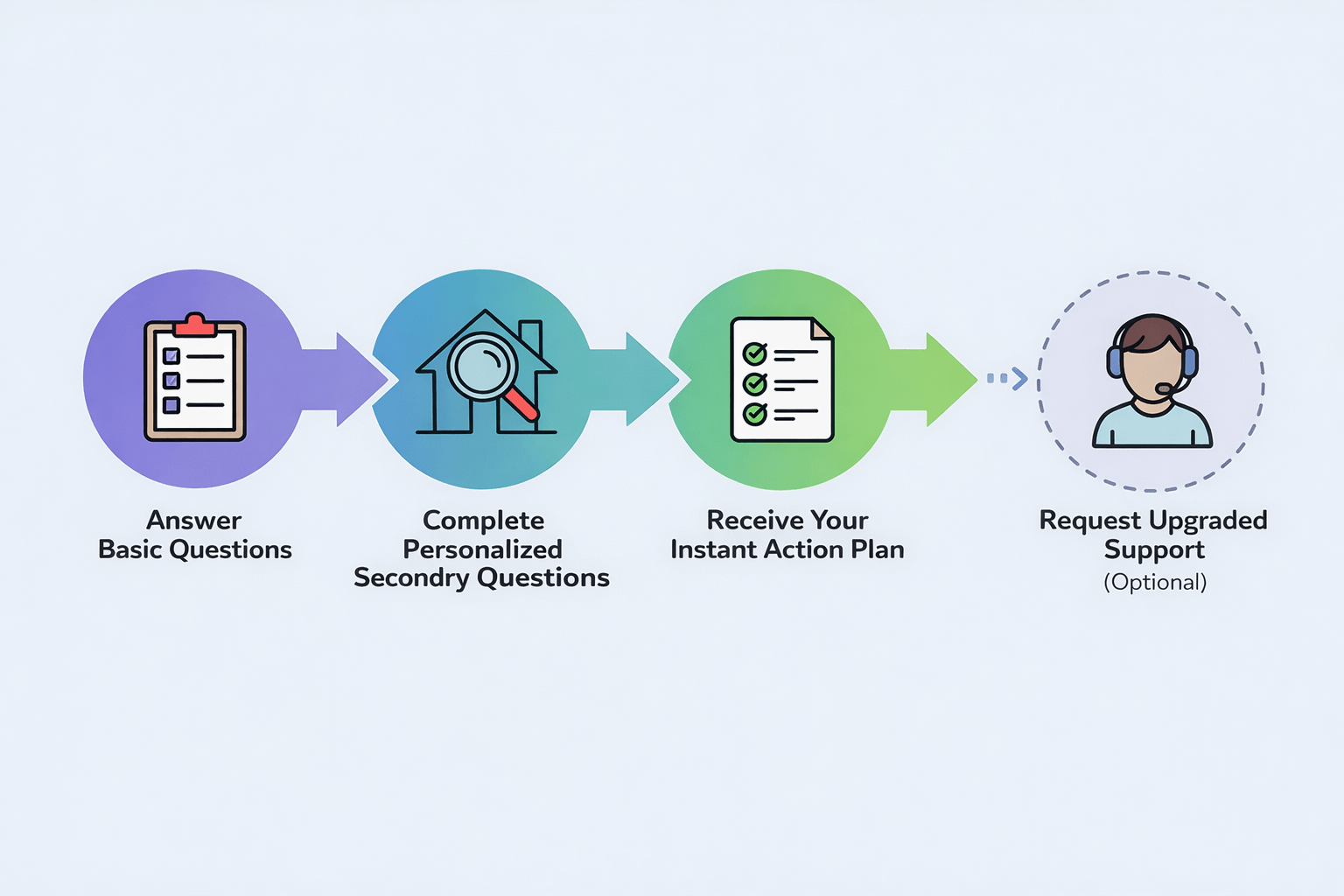
The assessment works through your symptom timing, the rooms involved, your bedding and home characteristics, moisture indicators, pet and cleaning patterns, and recent home changes. Results are organized and ready immediately when you finish.
You'll get specific direction on which allergen sources to investigate first, what to change or test, and whether your pattern warrants a professional. Not generic advice to "reduce allergens" but a prioritized roadmap based on what your answers actually show.
understanding of their air
complete
Select "Breathing or allergy symptoms" when you begin
What You Get From the Assessment
🆓 No-Cost Changes to Try First
A lot of indoor allergy headaches improve significantly with changes that cost nothing: adjusting how and when you ventilate specific rooms, changing bedding washing frequency, modifying where pets sleep, or improving bathroom exhaust habits. The assessment tells you which of these are relevant to your situation before recommending any product.
🛒 Targeted Guidance If Products Are Needed
If your situation points to a specific source (dust mites, mold moisture, dander concentration, poor filtration) you'll get guidance on what actually addresses that cause. Allergen-barrier covers when dust mites are the issue. A dehumidifier recommendation when moisture is feeding mold. Not a blanket "buy an air purifier" before the source is identified.
👷 When to Bring In a Professional
If patterns suggest hidden mold, HVAC contamination, or a moisture intrusion problem that needs hands-on inspection, the assessment tells you clearly — so you know what kind of professional to call and what to ask them to look at.
Optional upgrade: After your free assessment, a U.S.-based analyst can review your specific situation, interpret the findings, and answer follow-up questions. Under $150 for personalized review. Start free. Upgrade only if you need it.
Why EezyAir
Investigation Before Solutions
We identify which allergen sources are active in your home before recommending anything. That's the step most people skip, which is why they buy solutions that only partially work.
No One Enters Your Home
You do the walk-through yourself. The assessment guides you on what to observe, check, and note so you build an accurate picture without scheduling an appointment.
No Equipment or Upsell
EezyAir sells information, not hardware. There's no incentive to recommend products you don't need. If the answer is washing your pillows and cracking a window, that's what you'll hear.
Find Out What's Giving You Headaches at Home
8 minutes. Instant results. Free to start.
Begin Free AssessmentSelect "Breathing or allergy symptoms" to get started · No credit card required